LearnCV.ai
Teaching AI visually and practically!
Project maintained by purus15987 Hosted on GitHub Pages — Theme by mattgraham
🧪 Practice Lab – 2: NumPy & ML Model Design
🎯 Objective:
Practice building and testing basic machine learning algorithms from scratch using only NumPy (no TensorFlow/PyTorch for model internals). Also practice clean coding with OOP (Object-Oriented Programming).
💻 Lab Problems (Choose one)
Easy Level
-
Linear Regression – do both:
- Closed-form solution (normal equation)
- Gradient Descent (add Ridge regularization)
-
Data Split & Evaluation – create functions to:
- Split data into train/validation/test sets
- Apply scaling
- Calculate metrics (MSE, MAE, R²)
Medium Level
-
Logistic Regression (Binary):
- L2 regularization
- Stable math using log-sum-exp
- SGD or mini-batch gradient descent
-
K-Nearest Neighbours (KNN):
- Different distance metrics
- Weighted voting
-
Small Feed-Forward Neural Network:
- 1–3 hidden layers
- Activation functions (ReLU, Sigmoid, Tanh)
- Batch normalization option
Hard Level
-
CNN Basics:
- Implement conv2d and maxpool functions
- Train a small CNN on part of MNIST
-
Simple Autoencoder:
- Reduce dimensions
- Show reconstruction quality
-
Optimization Algorithms:
- Implement and compare: SGD, Momentum, RMSProp, Adam
- Show and analyze convergence plots
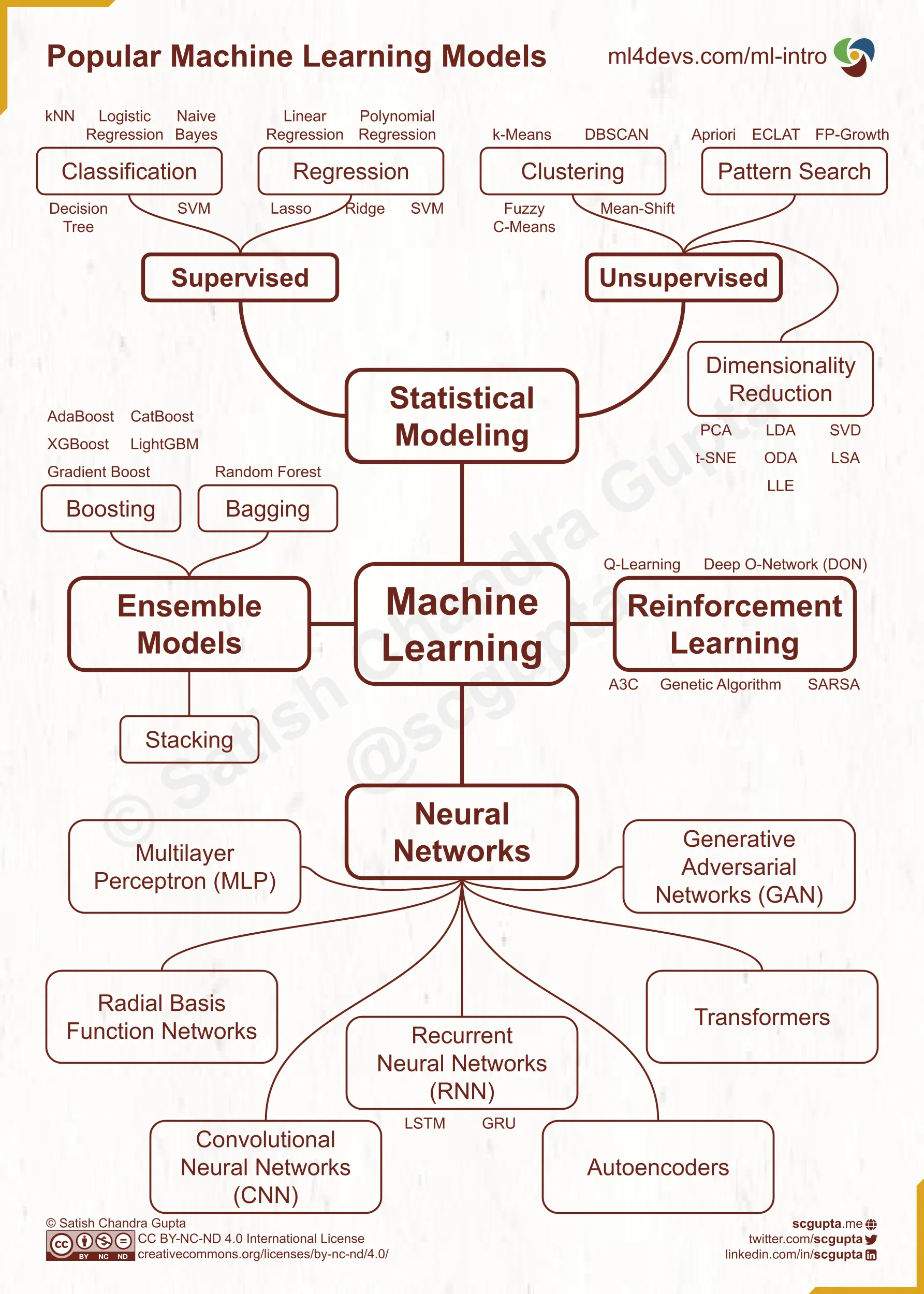
An Engineer’s Trek into Machine Learning
🛠️ Lab Instructions
- Pick one problem from above.
-
Plan your code before starting — draw a small diagram of your components:
- Example: DataLoader → Model → Optimizer → Trainer → Metrics
- Write Python + NumPy code (vectorized, avoid loops over each sample).
-
You can use
matplotlibfor plots, andscikit-learnonly for:- Loading datasets
- Checking results (not for internal model work)
-
Create unit tests to check:
- Correct shapes
- Gradients (numeric check)
- Loss decreases during training
-
Write a short report (2–4 pages, PDF):
- Problem statement
- Design choices
- Algorithms used
- Experiments + plots
- Key results and conclusions
- Submit your code + tests + report in a ZIP or GitHub repo.
📂 Suggested Project Structure
README.md          # Instructions to run
dataset/           # dataset files (.csv / .png / .xsl)
results/           # experimentation results
src/               # Code files
  |_model.py
  |_train.py
  |_utils.py
  |_dataloader.py
  |_main.py
  |_eval.py
  |_test.py
tests/             # Unit tests
report.pdf         # Your short write-up
📊 Example: Linear Regression
Components:
- DataLoader → loads dataset
- LinearModel → predict, loss, gradient
- Optimizer → SGD with learning rate
- Trainer → training loop, early stopping
Tests:
- Shapes match
- Loss decreases each epoch
- Gradient error < 1e-5
🏆 Marks Distribution (Total 35)
| Criteria | Marks |
|---|---|
| Understanding problem | 5 |
| Correct, vectorized code | 10 |
| Modular design, OOP | 7 |
| Experiments & analysis | 6 |
| Tests & reproducibility | 4 |
| Report clarity | 3 |
| Total | 35 |
🙏 Credits / Acknowledgements
We acknowledge the use of open-source educational content and inspiration from the following sources:
- NumPy Documentation – https://numpy.org/doc/
- Matplotlib Documentation – https://matplotlib.org/stable/contents.html
- Python Data Science Handbook by Jake VanderPlas (O’Reilly, open-access version available online)
- scikit-learn Documentation – https://scikit-learn.org/
- An Engineer’s Trek into Machine Learning – www.ml4devs.com
- CS231n: Convolutional Neural Networks for Visual Recognition – http://cs231n.stanford.edu/
- Dive into Deep Learning (D2L.ai) – https://d2l.ai/
- Machine Learning Mastery – Code Algorithm from Scratch – https://machinelearningmastery.com/
This lab is intended solely for academic and practice purposes.
Full credit goes to the original authors and maintainers for their contribution to the open-source and data science education community.